

Guides
What stays with the house: a clear bilingual inventory
Answer an American buyer’s questions about included items by separating presentation, agreement, identification and furniture valuation.
Contents
“Does it convey?” An American buyer points to a kitchen appliance, curtains, or furniture seen in the property video. The seller replies that the house will be handed over as agreed, but each person may retain a different picture of that agreement. A bilingual inclusions list resolves these ambiguities before the keys change hands. It is not a translation of the whole listing. It connects each important item to a specific answer and to the decision that needs proper treatment in the sale documents.
Begin with what was presented
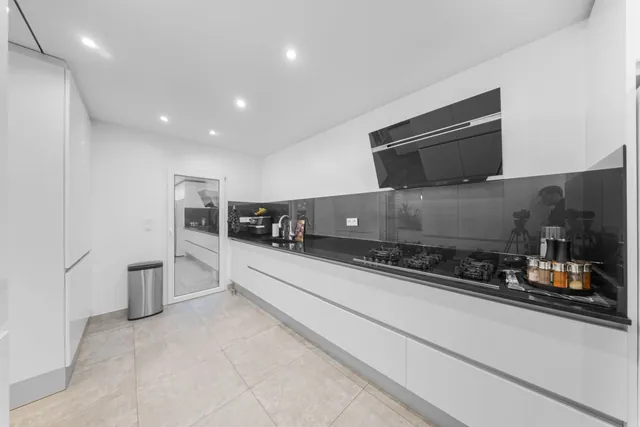
Review the photographs and viewed spaces to identify items a buyer might reasonably ask about. Do not assume that everything visible stays or that everything movable leaves. The presentation starts a discussion; it does not independently determine the scope of the sale. The parties and professionals preparing the agreement need to establish what is included rather than infer the answer from how the property was furnished for photography or a viewing.
For each significant item, separate practical identification from legal classification. You can describe an object and the seller's intention without deciding whether it is legally part of the real property or movable contents. Where that classification affects the transaction, have the notaire confirm it. The working list is a communication tool, not a substitute legal definition of the assets or a way to decide disputed classifications from appearance alone.
Name the item so both parties can locate it
A line reading “kitchen appliance” may identify several different objects. Specify the room, position, and useful identifying information without publishing unnecessary personal details. A reference photograph can distinguish similar items. If a model reference or manual is available, note it. Do not complete technical characteristics from memory merely to make the entry sound more informative. Unknown information can remain unknown until it is verified.
Place the French designation and English explanation together, retaining the same item identifier in both versions. The objective is not an elegant synonym but the ability for both people to point to the same object and understand the same answer. An English term broader than its French counterpart may create an extra expectation. Rephrase where needed instead of assuming that a fluent-sounding translation is necessarily precise for the property.
Use answers that remain consistent
During preparation, distinguish proposed inclusion, exclusion, and a decision still to confirm. Once agreed, the record should reflect the selected decision and version, with the appropriate professional validation. Do not leave an older list circulating that says an item stays after later discussions have changed that intention. A date and version reference help prevent different documents being produced by different people on handover day.
If an item shown in the presentation will be removed or replaced before the sale, describe the intended change and have it properly incorporated into the exchanges. Do not promise an equivalent replacement without clarifying what equivalence means and obtaining agreement. Furniture questions may seem minor beside the house price, yet they materially affect what the buyer expects to find on arrival, particularly when traveling from abroad with limited opportunities to recheck the property.
Separate condition, operation, and value
Identifying an object does not certify that it works. Present available information about condition and checks performed, distinguishing an observation from a guarantee. An old invoice may establish a reference without proving current operation. Where a test is useful and feasible, agree its conditions. Previous use is not a substitute for describing what has actually been checked, and an absence of testing should not be concealed by reassuring general wording.
The French tax administration explains that furniture’s existence and value require justification for its treatment in calculating property capital gains. Do not assign an arbitrary amount solely to alter the transaction figures artificially. Have the required classification and valuation handled with the notaire and relevant professionals using real evidence. The bilingual list helps identify the objects; it does not authorize unsupported values or determine their tax treatment by itself.
Keep the agreed list through the final visit
Before handover, compare the agreed version with what is actually present. This should not become an opportunity to add items quietly or erase a disagreement. Report differences and ask how they should be handled. The list should resolve specific questions rather than create a vague impression that everything matches while an important point remains open. Keep any agreed correction connected to the item concerned and the current version.
The guide to buying from abroad explains the wider context. For preparing a Côte-d’Or house sale involving French and English exchanges, contact Shawez Ali, real estate agent. An attractive presentation can establish interest; precise answers about what stays in the home allow the next conversation to proceed without either party having to guess the content of the agreement.